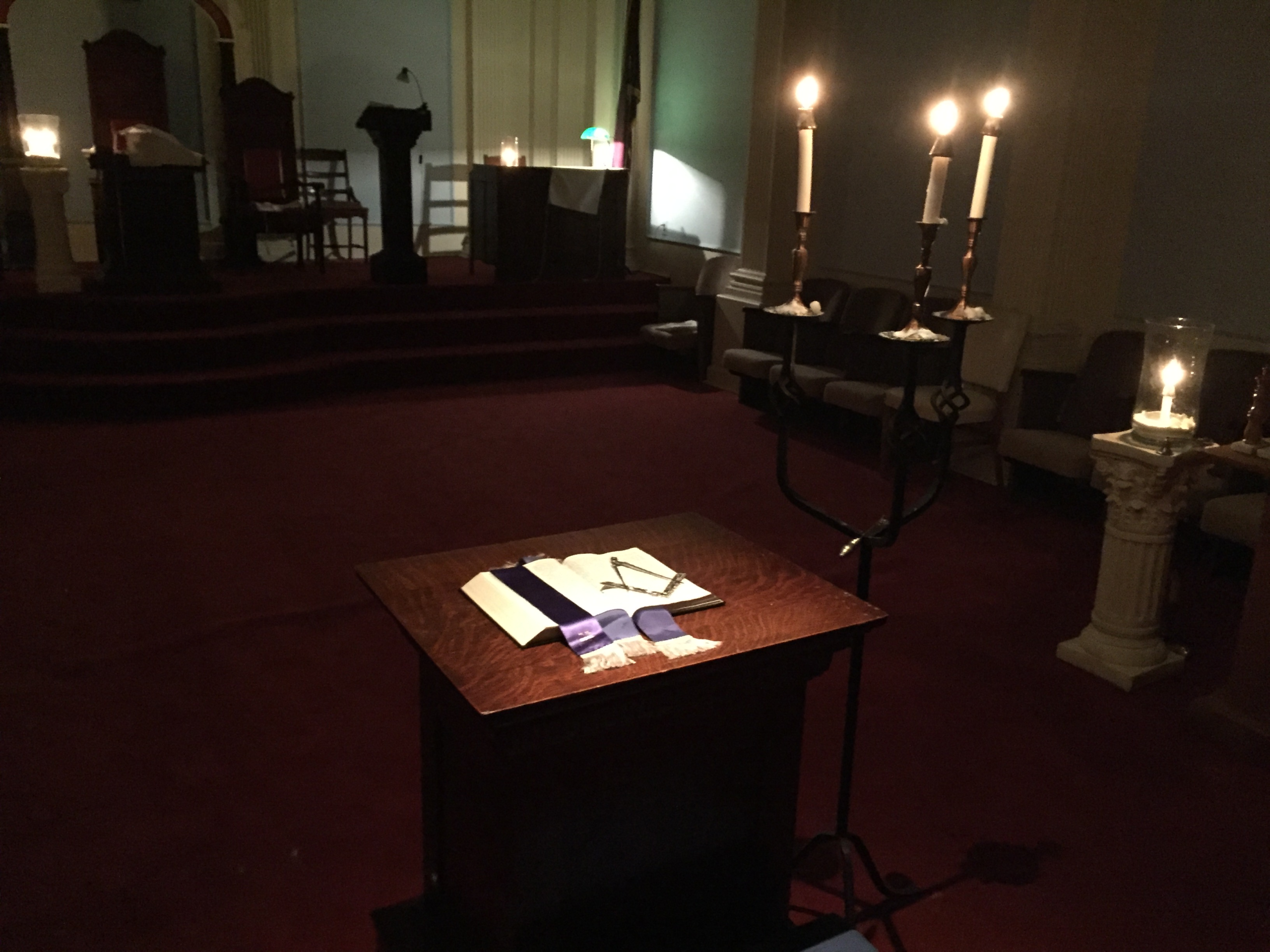
The following is a talk I gave at the Autumn 2024 meeting of Abraham Lodge No. 8 in Louisville, Kentucky, an Observant Lodge that meets quarterly. It was a pleasure to be invited to spend the evening with them and share these thoughts.
In 1853, at the regular Grand Communication of the Grand Lodge of Louisiana, Albert Pike likely rendered the brothers present speechless with a strongly worded three-hour address, which he gave at their request. He had only recently begun the process of recrafting the degrees of the Ancient and Accepted Scottish Rite; indeed, many important snippets from what would later be the degree lectures found their way into the speech. His completed first draft of the Degrees, which we usually term his “Magnum Opus,” was printed and distributed about four years later, yet he asserts that these quotations come from “our lectures.”
Having spent most of my Masonic years in Louisiana, there seems to me to be a kind of immediacy to his words. Clearly he descended upon a state that was deeply divided over what was and was not regular masonry. For example, when talking about how a French Mason is as genuine a Mason as one made in the United States, he said,
(more…)I am well aware that this assertion will startle many of our Brethren, and especially those who think that Masonry would die the death, if certain set phrases and peculiar sentences, and particular turns of expressions were forgotten or altered; who think that one is a bright Mason if he can accurately repeat by heart a formal lecture by question and answer, give the degrees according to rule, and open and close the Lodge by the stereotyped formula. I do not undervalue this accuracy. It is useful and proper; but it is no more Masonry, than red-tapeism is statesmanship. It is the soul and spirit of the degrees that really constitute Masonry. The words and phrases are but the body.