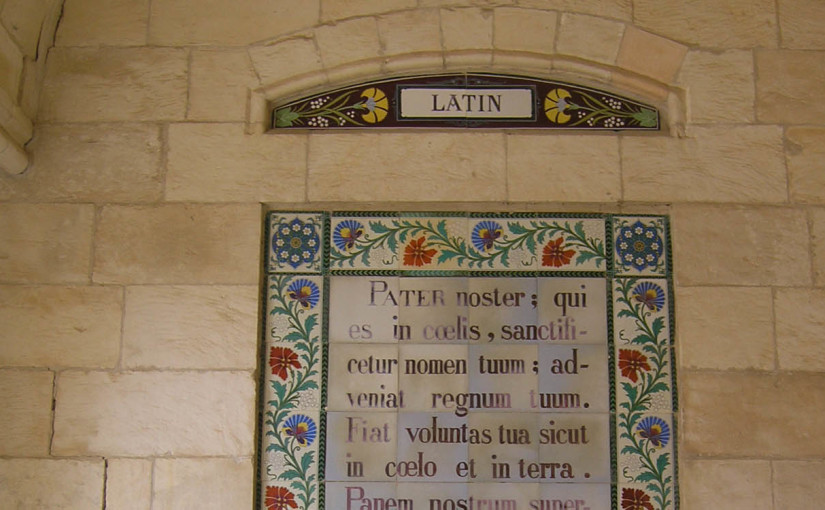
The following transcription is based on Harold Copeman’s transcription of a reading given by John Field and Charles Low of the Westminster School, who both followed the rules of John Sargeaunt’s explanation of “Old Style” or Modern English Latin. I’ve also included his transcription of the Gloria Patri (that’s right, pronounced PAY-trigh). This would have been how Latin was generally pronounced even in the United States until the very late nineteenth century, when Classical reforms started taking root.
Pater noster
Pater noster qui es in cælis, [ˈpʰeɪtʰɚ ˈnɒstɚ kwaɪ ɛz ɪn ˈsiːlɪs]
sanctificetur nomen tuum: [saŋktɪfɪˈsitʰɚ ˈnoʊmɛn ˈtʰjuʊm]
adveniat regnum tuum: [adˈvɛniat ˈɹɛɡnəm ˈtʰjuʊm]
fiat voluntas tua [ˈfaɪæt βɔˈlʊːntʰas ˈtʰjua]
sicut in cælo et in terra: [ˈsaɪkʊt ɪn ˈsiːloʊ ɛtʰ ɪn ˈtʰɛɹei]
et dimite nobis debita nostra, [ɛtʰ ˈdaɪmɪtʰi noʊbɪs ˈdibɪtʰa ˈnɒstʰɹa]
sicut et nos dimitimus debitoribus nostris: [ˈsaɪkʊtʰ ɛtʰ nɒs ˈdaɪmɪtɪmʊs dibɪˈtʰɔɹɪbʊs ˈnɒstɹɪs]
et ne nos inducas in tentationem: [etʰ ni nɒs ɪnˈdjukas ɪn tʰɛntʰaʃiˈoʊnɛm]
sed libera nos a malo. [sɛd ˈlaɪbəɹeɪ nɒs eɪ ˈmeɪloʊ]
Gloria Patri
Gloria Patri et Filio et Spiritui Sancto [ˈɡlɔːɾia ˈpeɪtraɪ ɛtʰ ˈfaɪlioʊ ɛtʰ ˈspaɪrɪtʰjuaɪ ˈsæŋktʰoʊ]
sicut erat in principio et nunc et semper [ˈsaɪkʊtʰ ˈɛɹaːtʰ ɪn pɹɪnˈsaɪpioʊ ɛtʰ nʌŋk ɛtʰ ˈsɛmpɚ]
et in sæcula sæculorum. Amen. [ɛtʰ ɪn ˈsiːkjula siːkjuˈlɔɹʊm ˈeɪmɛn]
I’ve begun teaching Josquin Desprez’s best-known motet, “Ave Maria … virgo serena” to the smaller choir for Lessons and Carols. While making an edition, I started wondering what the historically informed pronunciation of the piece was, especially considering how strangely the text is accentuated in the pitch lengths and contours. Because we so rarely sing Josquin, I hadn’t really investigated what his version of Latin might have sounded like, though I have done similar investigations for all kinds of historical places and times. Sometimes it is helpful to hear Poulenc’s Latin, for instance, as French-accentuated rather than “incorrectly set,” which is what I often hear of his Gloria or Dialogues of the Carmelites.
The above is the edition I made for the choir, which allows four beats per measure and ties off each grouping of notes into those beats of a quarter note in length. I was surprised not to find a particularly easy-to-read edition of this piece with a piano reduction, so I also arranged one of those to speed rehearsal along.
Once that edition was sorted, I began investigating the Latin that this early motet (apparently dated to around 1485) would have been written with in mind.
Harold Copeman’s 1990 out-of-print sourcebook Singing in Latin features some good information on this kind of Latin, which is Franco-Flemish, specifically Picard. This is about as north as Latin naturally traveled in Europe and was heavily influenced by Dutch, as Latin languages go.
Here’s the text:
Ave Maria, gratia plena, Dominus tecum, virgo serena. Ave cujus conceptio, solemni plena gaudio, cœlestia, terrestria, nova replet lætitia. Ave, cujus nativitas, nostra fuit solemnitas, ut lucifer lux oriens, verum solem præveniens. Ave, pia humilitas, sine viro fecunditas, cuius annunciatio, nostra fuit salvatio. Ave, vera virginitas, immaculata castitas, cuius purificatio nostra fuit purgatio. Ave præclara omnibus, angelicis virtutibus, cujus fuit assumptio nostra glorificatio. O Mater Dei, memento mei. Amen.
Using information in that Copeman book, I put this IPA transcription together:
This might be the strangest form of Latin I’ve run into. I haven’t found anyone giving this kind of Latin a go with this piece, but I’m all ears if anyone else has!
This definitely helps me hear why Josquin gently emphasizes the second syllable of “Ave” in the opening, and the other final syllables in the triple section.
Don’t worry; I’ll plan to use Italian Latin with the students. It’s just good to know a bit about his text setting mentality. In all of this, I do want people to think of Josquin not as some abstraction that musicologists secretly discovered at some point, but rather a living, breathing man who lived a long and famous life, becoming the favorite composer of the real living Martin Luther. When we hear his music in his accent, I feel like he comes alive a bit more; it isn’t a museum piece any more, but a real northern French man’s clever putting together of a real text for real people. The Franco-Flemish composers like him and even Dufay, Binchois, Ockeghem, and the rest, formed an influential fad, just like choral music from Latvia and Estonia are becoming more in vogue these days from real people with real choirs.